
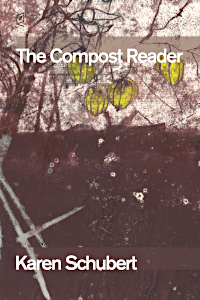
The Compost Reader
"In her first full-length collection, Karen Schubert works 'Elbows deep in compost,' sifting through that which accumulates with the passage of time, the fecund and dangerous accumulations of a life: memory, regret, joy, and loss. Schubert's fertile reflections by turns witness, correct, and renew the past, her patient gaze transforming both observer and observed. This collection runs through the events of a life like the Ohio River runs through Schubert's native terrain, and like that river 'it will arrive / with more than when it started.'"—Kimberly Johnson
From the Book
For the Boys
What Others Say
In her first full-length collection, Karen Schubert works "Elbows deep in compost," sifting through that which accumulates with the passage of time, the fecund and dangerous accumulations of a life: memory, regret, joy, and loss. Schubert's fertile reflections by turns witness, correct, and renew the past, her patient gaze transforming both observer and observed. This collection runs through the events of a life like the Ohio River runs through Schubert's native terrain, and like that river "it will arrive / with more than when it started.
Karen Schubert's poems begin in the moment in a particular place and time, without introductions, without commentary. But this stark present is gradually woven with reminiscence which, like compost, makes the moment yield its full possibilities. As the poem grows, the distance between writer and reader diminishes until we feel a bond with genuine intimacy.
In the city where I come from," begins one of the poems in Karen Schubert's new book, "the cost of a thing depends on how much you have." Beware this book, then, reader: for what won't cost you more, once you've taken in all the riches to be found in these pages? The Compost Reader is a delight, where the wind plays through organ pipes strapped to the roof of a car, where kids play on baseball diamonds built on the leftovers from sawmills, where you might buy pastries called "Jesus Heels" at a roadside stand. "There should be a name for these days / when we wake in one place and sleep / in another," muses the conclusion of another poem … and if that name is found, we might employ it here as well: these poems are never content to leave us where they began. Page after page, like the seer in her title poem, Schubert seems able to spin any of the world's small details into a meaningful, unexpected truth.
About the Author