
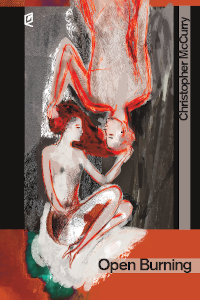
Open Burning
At times elliptical and surreal, the emotional and psychological landscape of these poems is punctuated by flashes of the real risks and rewards of navigating difficult times with grace and compassion. Through the magic of these well-crafted poems, we become invested in the seemingly inconsequential as well as the life-changing.
"The poems in this rich collection are both spare and candid, chronicling the demise of a marriage, even as it nearly coincides with a father's blooming love for his young daughter. One love is lost, but a wholly different love arrives. At times the contrast is inexplicable and the speaking voice in these poems doesn't quite know to whom the poems should be addressed. That is a perspective I find so arresting in this book, a crossroads of grief that has no bottom and love that has no end, weighted with the plain responsibility of somehow going forward.
—Maurice Manning
From the Book
Open Burning
What Others Say
The poems in this rich collection are both spare and candid, chronicling the demise of a marriage, even as it nearly coincides with a father's blooming love for his young daughter. One love is lost, but a wholly different love arrives. At times the contrast is inexplicable and the speaking voice in these poems doesn't quite know to whom the poems should be addressed—the ex-wife, the young daughter, himself, the ether. That is a perspective I find so arresting in this book, a crossroads of grief that has no bottom and love that has no end, weighted with the plain responsibility of somehow going forward.
Once there was a boy," Christopher McCurry writes in Open Burning, "and now there is still a boy but also the idea of a man." Once there was a marriage between that man and a woman and a daughter who was born of that marriage that no longer is, and McCurry writes about that, too, that most of all in poems that are at once frank and vulnerable. It's hard work, peeling away the tough layers to get to the raw seed of the heart, and McCurry goes there again and again in this book, taking risks that most male writers won't. Ultimately he understands men and their power to wound and fail, and he takes that sorrowful knowledge and uses it to instruct the daughter he loves so fiercely: "And why / when you are afraid of me / I think good / wish me dead— / what's more useful / to a little girl / than knowing / men are dangerous.
About the Author