
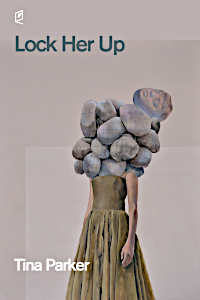
Lock Her Up
In Lock Her Up, Tina Parker gives voice to the women from the not too distant past who were not allowed to make decisions about their own bodies and mental health. In this thought-provoking collection, Parker brings to life three characters and highlights their stories through poems and research. We grow in care and concern about Mattie M. Roberts, Rachel Wells and Emma Darby and are able to relate to their struggles and circumstances. Lock Her Up is a deeply moving book and Accents Publishing is proud to bring it to you.
From the Book
Pleas for Admission
What Others Say
Tina Parker's haunting new collection Lock Her Up is a tribute, a beautifully rendered defense of women who throughout the late 1800s and mid-1900s were admitted into the Southwestern Lunatic Asylum in Virginia. It is an examination of the platitudes, misdiagnoses and treatments administered to women who needed succor not restraint, understanding not punishment; women who had been set aside by their families or bored husbands, were abused, widowed or their children dead or taken from them. This poet has done her research. "The day they came for me / I cartwheeled into the sea / And sang open the snow." Reader, you will wince, you will curse, you will weep.
Tina Parker's brief, imagistic poems work like chants to conjure the women in this remarkable collection. These fragmented and compressed poems perfectly represent the imagined lives of women institutionalized in the late 19th and early 20th centuries in a "lunatic asylum" near the poet's homeplace. And yet, these poems are timeless; from the hateful, recent political mantra of the collection's title to the (mostly) unchanging position of women in a patriarchal society, these poems speak to contemporary audiences about the suppression of women's voices. With regularity we are still dismissed, spit upon, raped, and "shushed;" and if we carry "extended grief of losing children" or rebel against traditional gender roles or express "hatred / of marriage / and religion," we are still labeled "High strung," "unsettled," flaunting "hysteria." Parker's haunting poems unlock and venerate our foremothers who were "right troublesome and at times excited" so that we can all be reminded: "See I am here / Please tell them / I was here.
About the Author