
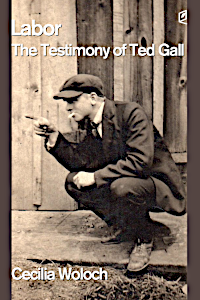
Labor: The Testimony of Ted Gall
An extended poem in linked sections, in the voice of coal miner and activist Ted Gall, LABOR weaves one man's personal history into the history of work and justice in America.
"In Labor, Woloch pulls a voice from the archives—that of Ted Gall, a miner and union organizer in Western Pennsylvania during the first half of the twentieth century. This poem, composed almost entirely in words written by Gall himself, gives a first-hand account of what it was like in the mines, in the unions, and in the spirits of the working poor, 'lifting their voices like trumpets' to sound what is somehow both historical and timely. This is an important contribution to Appalachian docupoetics and cross-racial labor solidarity. Woloch is a rescuer of language, a poet who knows where to dig up truths."—Joy Priest
From the Book
I. Mining (1918–1920s)
What Others Say
In Labor, Woloch pulls a voice from the archives—that of Ted Gall, a miner and union organizer in Western Pennsylvania during the first half of the twentieth century. This poem, composed almost entirely in words written by Gall himself, gives a first-hand account of what it was like in the mines, in the unions, and in the spirits of the working poor, "lifting their voices like trumpets" to sound what is somehow both historical and timely. This is an important contribution to Appalachian docupoetics and cross-racial labor solidarity. Woloch is a rescuer of language, a poet who knows where to dig up truths.
Profit, exorbitant profit, promises corruption. This poetic meditation, at once a documentary and a monologue, tracks the surprising confluence of miners' unions and the Harlem Renaissance. By the end of this eloquent and plain-spoken chapbook, such a connection seems inevitable. Our best art springs from the foundational belief that the beauty of art blooms from the struggle for justice.
Ted Gall's voice calls out to us from past eras, when the robber barons of the 19th Century had given way to faceless corporations whose rapacity and strongarm thugs, like the Coal and Iron Police, gave rise to the IWO and unions like the one that Gall, a true working-class hero, helped organize. These poems weave another bright human thread into the fabric of labor's history. Do yourself a favor and check them out, particularly in light of today's divisive unrest.
About the Author