
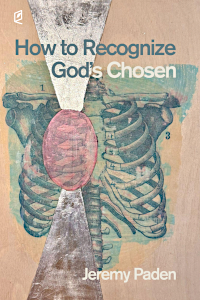
How to Recognize God's Chosen
how to recognize god's chosen is a collection of poetic fragments that make up a long poem loosely structured like a gospel account. The principal character of the lyrical narrative is referred to with the non-gendered pronouns zhe/hir, or at times as god's chosen or at others as the beloved. Pulling from a variety of religious and sacred texts—the Prophets, the Gospels, the Desert Fathers, Medieval mystics, the Upanishads, Sufi poets, and others—and the scholarly, textual debates surrounding manuscript culture, how to recognize god's chosen imagines a search for the divine set our contemporary moment of refugee crises, climate catastrophe, political populism, and the various forms of violence that make up life in the 21st century.
From the Book
xiv.
What Others Say
how to recognize god's chosen offers a nongendered seeker's haunting search for and encounter with nongendered divinity. In these tender, lyrical, and profound poems, Paden takes readers on a timeless journey describing the commonplace fate of saints and deities: despised in the flesh, honored in the abstract. As in the best biblical and mythological narratives, one finds here beauty in sacrifice.
Sometimes in periods of crisis, the theological underpinnings of our collective spiritual practices should be re-examined, their relevance renewed, and Jeremy Paden's how to recognize god's chosen is a powerful such opportunity. In our contemporary moment of populism, wealth disparity, climate insecurity, how to recognize god's chosen celebrates the commonplace and unusual ways we reach out to one another—the silbo gomero and kulning. It reminds us of the miraculous creatures of the natural world, such as the lungfish, the hellbender, the resurrection plant.
The new collection by Jeremy Paden is a chance to luxuriate—in language, in profound thought, and in imagery so rich it rises up from the page. how to recognize god's chosen is a deeply moving and wholly original collection of beautifully crafted poems that will challenge readers in all the best ways.
Jeremy Paden's extraordinary long poem in linked sections, how to recognize god's chosen, wrestles with faith and love in a mind-blowingly original way. The intensity and clarity of the language, its lyricism and its strangeness—not unlike the lush language of Berryman's Dream Songs, or the chiseled language of H.D.—lead the reader into those mysteries that lie beyond language itself, and leave us there to dwell in the brutal and beautiful magic of the world. I can't say how radical this work is, how gorgeous.
About the Author