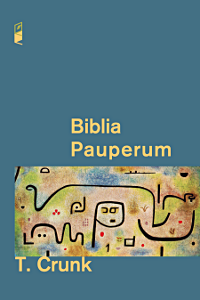
Biblia Pauperum
"I've been a huge fan of T. Crunk's poetry since his marvelous, Yale-winning debut, Living in the Resurrection. The poems in that volume and from the nearly two decades since its appearance have always seemed to me essential, life-giving, full of delights all too rare these days, and wisdom, yes,
real wisdom. If the poems in this new volume are leaner, hungrier, more restless and questing, than any we've seen from him before, they've lost none of the vitality, the sense of having grappled with the ineffable and emerged from unknowable, echoing depths, that Crunk's work always possesses. There are poems here ('Crows,' 'Ants,' the long 'Purgatory (Studies)') that are as good as any I know of being written today. T. Crunk is one of my very favorite contemporary poets" —Davis McCombs
From the Book
Eschatology
What Others Say
I've been a huge fan of T. Crunk's poetry since his marvelous, Yale-winning debut, Living in the Resurrection. The poems in that volume and from the nearly two decades since its appearance have always seemed to me essential, life-giving, full of delights all too rare these days, and wisdom, yes, real wisdom. If the poems in this new volume are leaner, hungrier, more restless and questing, than any we've seen from him before, they've lost none of the vitality, the sense of having grappled with the ineffable and emerged from unknowable, echoing depths, that Crunk's work always possesses. There are poems here ("Crows," "Ants," the long "Purgatory (Studies)") that are as good as any I know of being written today. T. Crunk is one of my very favorite contemporary poets.
Crunk seems to me a true voyant, rather than a pseudo-mystic, as so many other current poets are. His poems convey a very real sense of the sacramental; one feels most fortunate to follow him through his lines, just as he goes along, uttering strange religious cries.
Living in the Resurrection is filled with lustrous and portentous moments. In poem after sharply focused poem, in which the writing emphasizes meticulous attention to detail and offers some really breath-taking imagery, … there coexists a tone of reverence along with a sense of argument—an atmosphere of spiritual inquiry as well as fierce attachment …. [The book is] illuminated and illuminating ….
In Parables and Revelations … the moon writes suicide notes, ants prophesy, and mirrors and windows come face to face. Each poem directs our gaze toward the clues that shroud life's most profound mysteries. They are signposts for the journey we are all on, whether we realize it or not.
About the Author